

The climate of the 20th century is officially a foreign country. If you look at the maps from 1961–1990 and compare them to the reality of 2016–2025, the shift is undeniable: we have, in a single generation, effectively moved south by over 200 miles.
This isn’t a slow, peaceful transition.
For the UK, the “new normal” is harsh. We are shattering temperature records every four years, with June spikes hitting 37.7°C. Our infrastructure—from railways and NHS buildings to farming routines—was designed for a temperate climate that no longer exists. When we see tropical nights affecting public health and missing frosts allowing new crop pests to thrive, the practical reality is clear: we are living in a new climate era.
Summer heatwaves frequently coincide with slower wind speeds, naturally weighing on wind power output and severely exacerbating intra-day price volatility. Weather data from the Netherlands illustrates the trend clearly: this summer, wind speeds dropped by 3% compared to their 20-year average, while summer temperatures trended 10% above historic averages.
The effect of this lower wind output becomes particularly tangible during the evening hours. Just as the sun sets and solar generation drops to zero, electricity demand surges as people return home from work and switch on their air conditioning units.
It was a hot summer right across the board. Sizzling heatwaves boosted cooling demand across all of Europe, while widespread droughts reduced hydro output and low river levels weighed directly on nuclear power generation.
But there is a paradox here, one that holds the key to our response. The same intensity of sunshine that stresses our power infrastructure and alters our ecosystems is also the most potent energy source we have.
The Solar Opportunity
The IEA’s latest mid-year report highlights that despite the disruptions in global oil and gas markets, global electricity demand remains strong.
Here in the UK, the solar industry is seeing the results of the hot, sunny summer. This past July, as the heat was making headlines, solar energy accounted for 14.4% of our total electricity generation, producing 3.2 terawatt-hours (TWh) of electricity.
We are seeing a direct, positive correlation: as our climate becomes more extreme, our renewable capabilities are becoming more essential—and more productive.
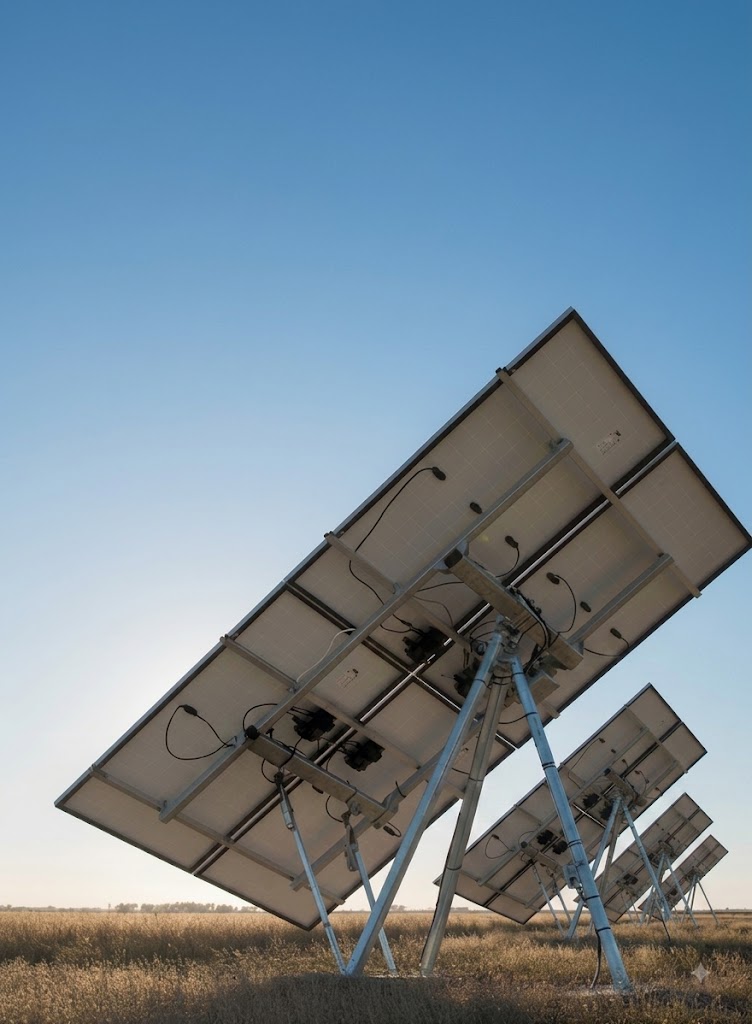
But generating more solar electricity isn’t simply about installing more panels. It is also about making better use of the sunlight available to us, adopting technologies like solar tracking.
Moving Beyond the Labels
I was told recently that many people still believe in climate change, but they are exhausted by the term “Net Zero.” They are tired of the politicisation, the buzzwords, and the abstract targets.
To that, I say: I don’t care what we call it.
We can stop arguing over the labels and start focusing on the engineering. As the summer heat cranks up, and winter weather gets more extreme. The need for electricity-intensive cooling and heating systems has increased. That’s where we need more efficient renewable energy generation, like solar tracking, which generates energy for longer during the day.
Our response to the new climate era must be one of pragmatic adaptation. We need to fortify our infrastructure, rethink our agricultural systems, and accelerate the transition to renewables—not because it is a moral stance, but because it is an infrastructural imperative.
The sun is providing us with a solution that is as powerful as the problem it helped create. The question isn’t whether we can afford the transition to renewables; the question is how much longer we can afford not to.
We have the technology. We have the proof in our generation numbers. Now, we simply need the resolve to build the future that this new, hotter climate demands.
What is your view? How do you see the future? Is the sun our biggest threat or going to be our saviour?
Read the IEA’s full report here.