

From laboratory testing to seven years of field experience, Corrie Energy is putting solar tracker reliability at the heart of Latitude40’s commercial production.
The real cost of moving solar panels
Solar tracking is a simple and proven concept: keep the panels facing the sun and they will capture more energy through the day. But delivering that extra energy economically over decades requires something more challenging — reliable, cost-effective movement.
Since our original vision of a commercially viable tracker for the UK, Corrie has focused relentlessly on driving down whole life cost. The upfront price of a component is only part of the equation. Installation, maintenance, replacement and lost generation during downtime all contribute to the cost of electricity over a solar farm’s lifetime.
That’s particularly important for the actuators — the components responsible for moving Latitude40’s solar panels. Our objective has never been simply to make trackers move. It’s to make them move reliably, year after year, at a cost that drives up your commercial returns.
Engineering simplicity into the movement
A core insight of Corrie’s patent was the recognition that traditional dual axis trackers have an Achilles Heel. All the motion control and force resistance reside in the central hub. We call this “bespoke complexity”, and it is central to the notoriously poor reliability record of obsolete designs.
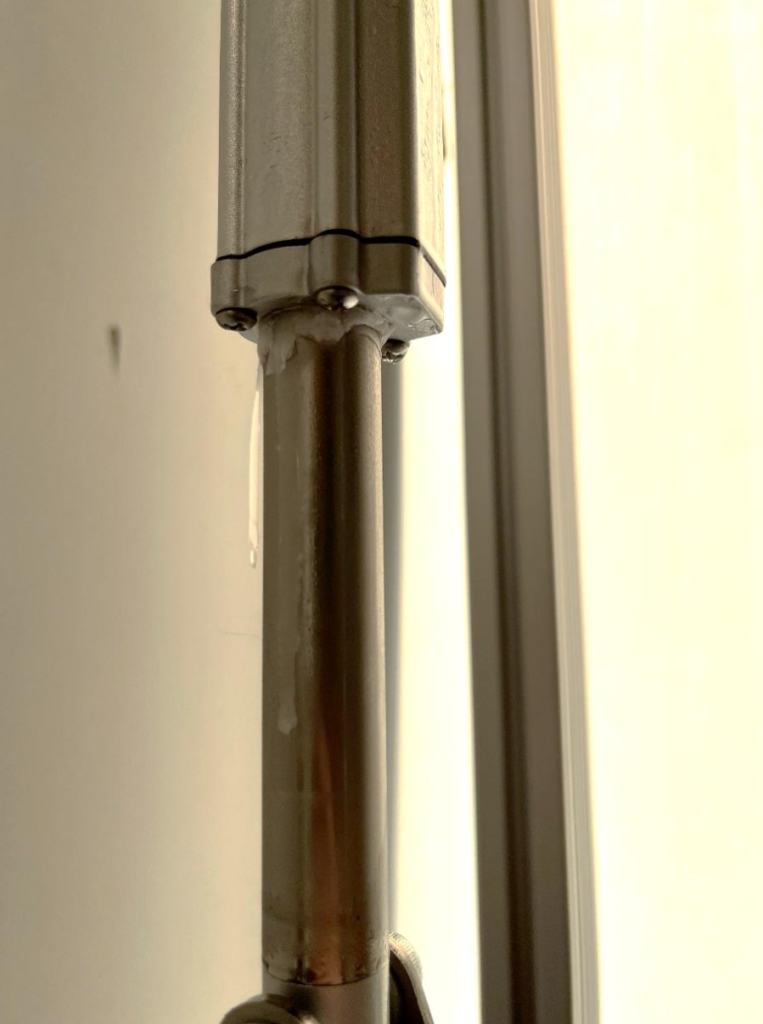
Our patented design allows structural loads to pass through the frame rather than the moving components. This reduces the demands on the actuators, allowing us to use simpler, off-the-shelf units. The challenge was identifying which actuator design would deliver the best long-term reliability. The modular architecture makes individual actuators accessible and quickly replaceable, as they are not integrated in the tracker structure.
The structure manages the loads. The actuators manage the movement.
Research by engineering students at the University of Sheffield has provided valuable field evidence supporting this principle. By measuring the electrical current drawn by actuators during the tracking cycle, the team found that operating loads remained consistently low over the six days analysed.
The findings were consistent with our intended design: structural loads are carried primarily through the tracker frame and pivot, rather than the actuators. The research also established a measurement baseline to help us monitor component performance and wear over time.
This is central to our approach to reliability and cost. Rather than relying on expensive bespoke drive assemblies, we can focus on selecting, testing and integrating standard components that are straightforward to install, maintain and replace.
From laboratory testing to Scottish winds
Since our first field deployments in 2019, Corrie has combined engineering analysis, accelerated laboratory testing and long-term outdoor deployment to understand how the complete tracking system performs.
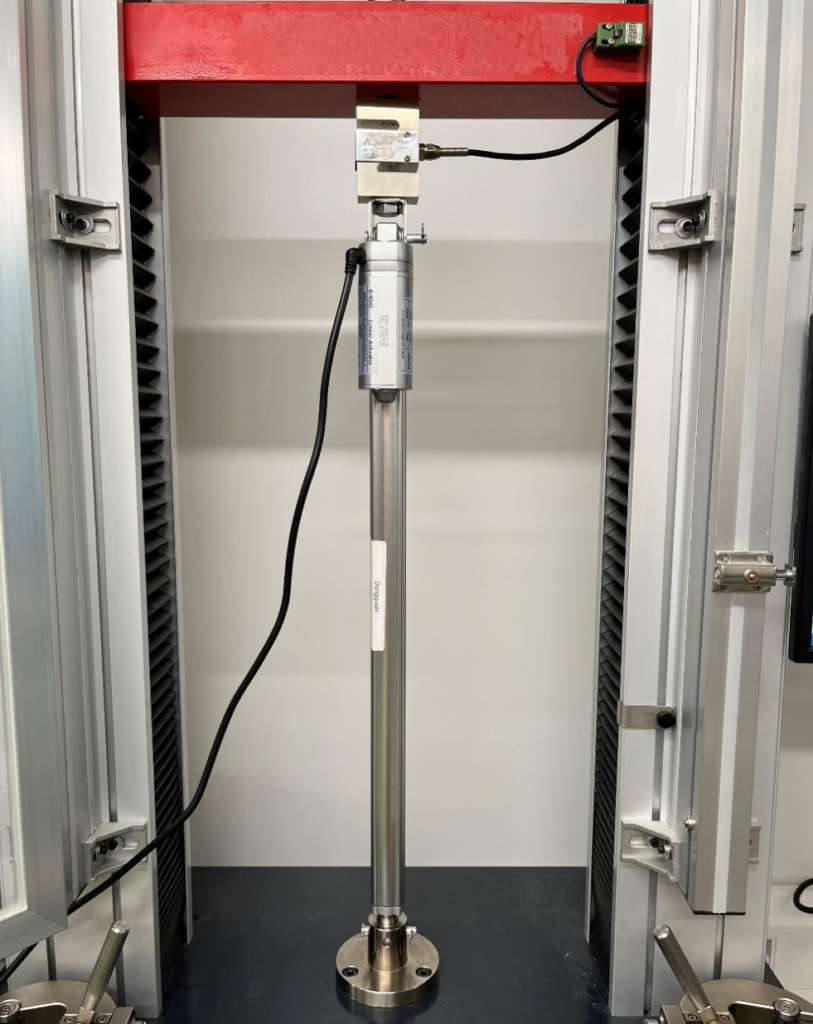
Independent laboratory testing
We worked with engineering consultancy JNDC to compared actuator designs. We did this through accelerated life testing, extreme temperature exposure, water ingress assessments and load testing. One shortlisted design completed the equivalent of seven years of accelerated operating cycles under deliberately demanding loads, then continued to function following further temperature and mechanical load tests. The programme helped establish which designs offered the best combination of durability, weather protection and practical maintainability.
Just as importantly, we’ve deployed Latitude40 trackers in real working environments, including Our Cow Molly, an upland dairy farm near Sheffield. This is a windy site –although not as windy as our deployment at House O’Hill wind farm in northern Scotland! These installations provide something that laboratory testing alone cannot: operational experience across multiple seasons, changing weather conditions and everyday use.
The successes and small failures on site help us understand how components perform as part of a complete system, rather than simply in isolation.
Seven years of learning, built into every tracker
This year, engineering interns Anabelle Griswold and Anthony Mascoli have been travelling between our UK sites. They’ve undertaken a detailed inspection and servicing programme focused on the actuators. Supporting the next generation of engineers is important to Corrie, and this has been an opportunity to combine hands-on field engineering with rigorous technical analysis.
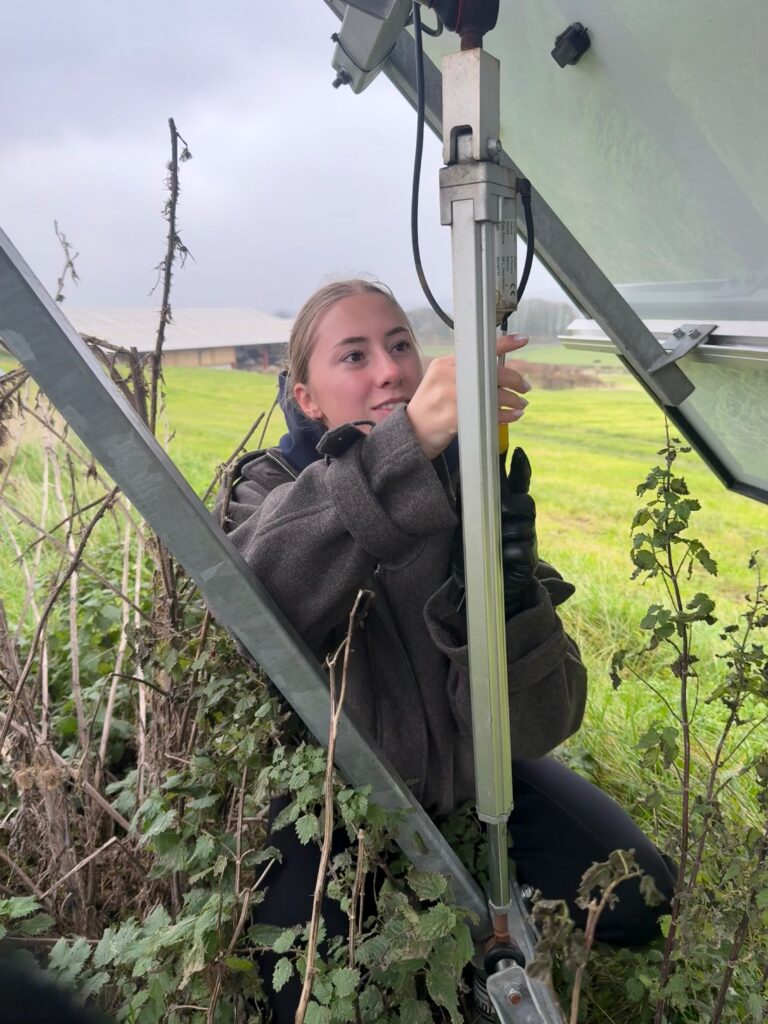
Back in the laboratory, the team has been examining components to identify practical improvements to durability and maintainability. The growing dataset will help guide engineering decisions as we move towards commercial production. Their work reinforces a key engineering principle: long-term reliability depends on how every component and process works together.
From field experience to repeatable manufacturing
As we move towards commercial production, our focus is on translating that experience into consistently manufactured, installed and maintained equipment. For actuators, this means clear specifications, qualified suppliers, repeatable assembly procedures and practical maintenance arrangements.
Latitude40’s modular design also allows actuators to be replaced quickly and easily. This is an important part of our whole-life cost strategy: maintenance should be predictable, simple and economical. Across a large solar installation, even modest improvements to component durability, installation consistency and serviceability can make a meaningful difference to lifetime costs.
Built to Move. Made to Last.
After years of development and field deployment, we’re taking the lessons learned into the next stage of Latitude40’s growth.
Our approach remains consistent: combine an innovative mechanical architecture with proven engineering practices, practical field experience and a disciplined focus on whole-life costs. Because the value of solar tracking isn’t simply the extra electricity it generates today. It’s the additional value it can deliver reliably throughout its operating life.