

Solar tracking isn’t just about generating more electricity. It’s about when that electricity is generated, how much it’s worth, and how effectively it can be used.
Most solar panels spend their entire lives facing the same direction. But the sun doesn’t. It moves across the sky throughout the day, and its height changes significantly between summer and winter.
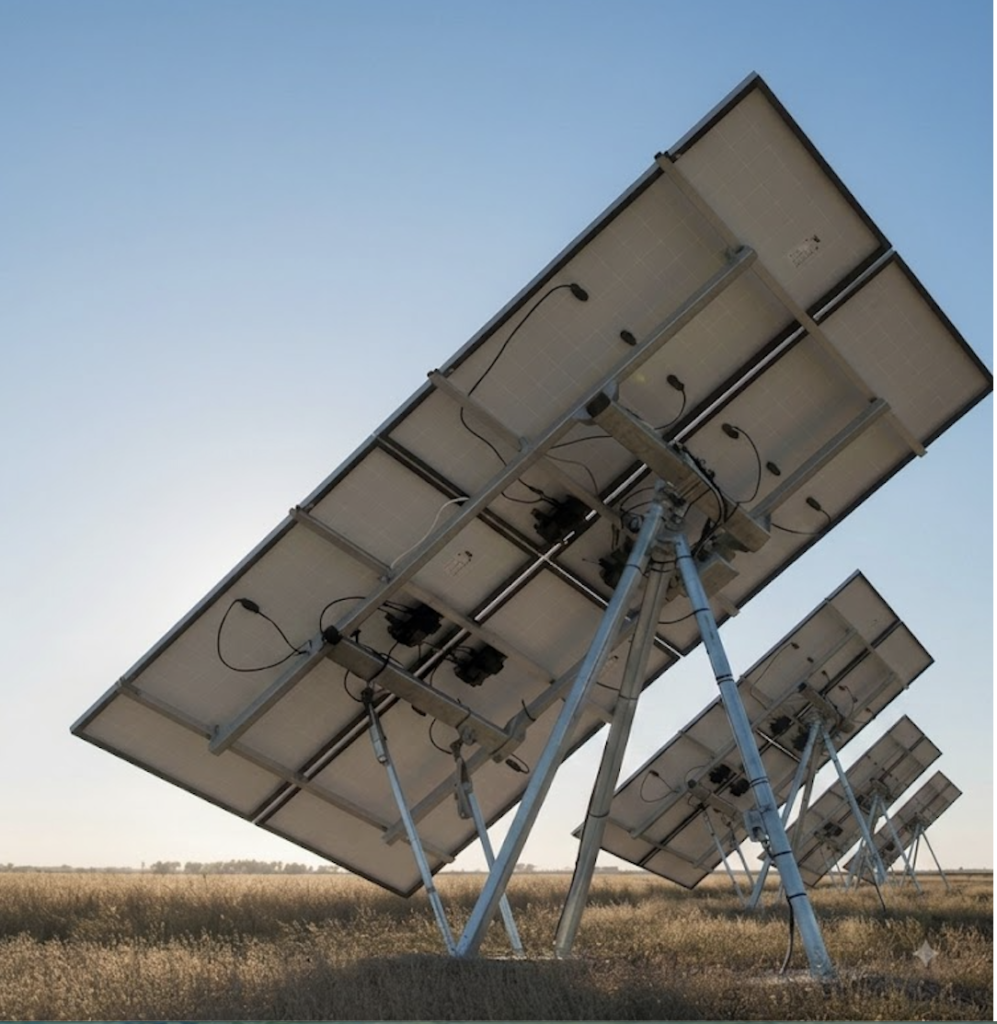
Solar trackers follow the sun, allowing panels to capture more sunlight throughout the day.
Single-axis trackers follow the sun from east to west
Dual-axis trackers also adjust for its changing height across the seasons — particularly relevant in the UK.
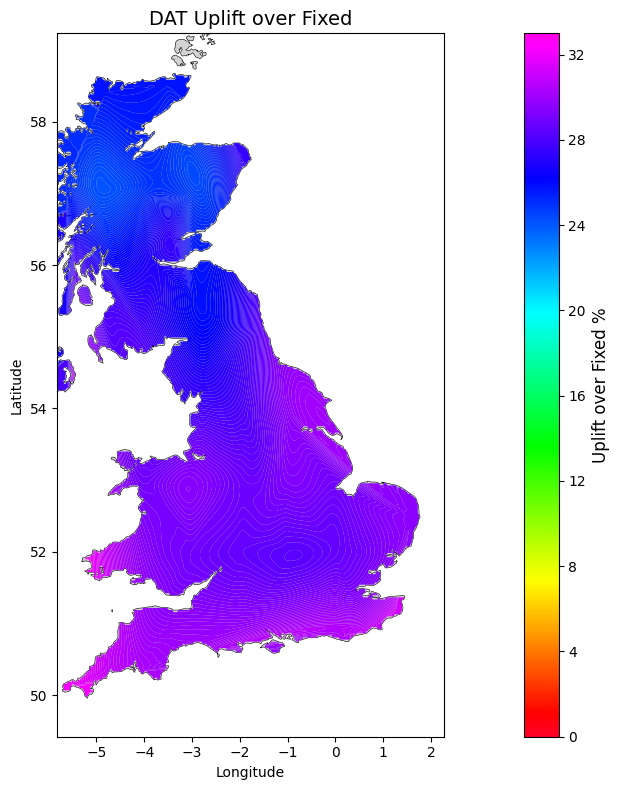
Corrie Energy’s UK modelling shows that our Latitude40 dual-axis solar tracker can generate up to 30% more electricity annually than conventional fixed solar panels, depending on location and array configuration.
This Solar Tracking Week, we’re exploring three benefits of solar tracking technology: Volume, Value and aVailability.
Volume: How much generation are we losing with fixed panels?
How much electricity are we missing by using fixed solar panels? Solar tracking is already widely used internationally, where the additional generation can justify the cost of tracking equipment.
A study of over 31,000 solar PV systems across Europe by Jonathan Leloux, Rodrigo Moretón Villagrá and colleagues found something striking.
The research draws on real-world generation data and found that tracking installations in Spain generated 47% more electricity per installed kWp than fixed systems, on average. Read the full report here.
Corrie Energy’s modelling Sol3D software indicates that our Latitude40 dual-axis solar tracker can deliver approximately 25–30% or more additional annual generation compared with modelled south-facing fixed solar arrays, depending on location and array configuration.
For solar developers and businesses, this creates an opportunity to generate more electricity from installed capacity, making better use of solar panels and potentially constrained grid connections.
Value: More electricity doesn’t’t always mean more money
As solar capacity increases across the UK, electricity generation is becoming increasingly concentrated around midday. When large numbers of solar installations produce electricity simultaneously, wholesale prices can fall.
This makes the timing of generation increasingly important to solar project economics. Fixed panels concentrate output around midday, whereas solar trackers extend generation into the morning and afternoon.
By generating electricity outside the midday solar peak, trackers can provide opportunities to capture higher electricity prices and improve the commercial value of solar generation.
More generation is good. More valuable generation is better.
aVailability: Solar electricity when it’s needed
For many businesses, the challenge isn’t simply generating enough solar electricity. It’s generating it when they need it.
Hospitals, farms and commercial facilities often have significant electricity demand outside peak solar hours. Extending generation into the morning and evening can improve the match between solar production and on-site consumption.
Our modelling for a proposed hospital installation in Northumberland illustrates this opportunity.
To provide the same annual contribution to the hospital’s electricity demand:
- A conventional fixed solar system required 4.41 MW, with 11% of generation exported.
- A Latitude40 tracking system required just 3.23 MW, with exports reduced to 5%.
That’s 27% less installed capacity to achieve the same annual contribution, alongside a significant reduction in surplus electricity exported to the grid.
These are project-specific modelling results, but they demonstrate why the generation profile matters as much as total annual yield.
For sites with limited grid capacity, solar tracking can also help generate more electricity from the available connection, with opportunities to integrate battery storage and flexible demand.
Getting more from UK solar
As the UK solar market matures, we need to look beyond how many MW we install and focus on what those MW actually deliver.
At Corrie Energy, we’re developing Latitude40 to make solar tracking a practical option for UK projects. We’re also collaborating with Solar Nation to help installers and customers understand where the technology makes commercial sense.
Solar tracking won’t be right for every site, but it deserves a place in the conversation when evaluating how to get the most from a solar investment.
Want to explore the opportunity?
Join our webinar on Tuesday 3 November at 11am, where we’ll demonstrate how our Sol3D software models and optimises solar tracker configurations.